
Portfolio
Projects & Research
Phishing-Detection Research
My paper, “Transformer-Based Models for Robust Phishing Detection in the Modern Cybersecurity Era,” was peer reviewed and accepted to IEEE ICCNS 2026, where I presented it on September 23, 2026.
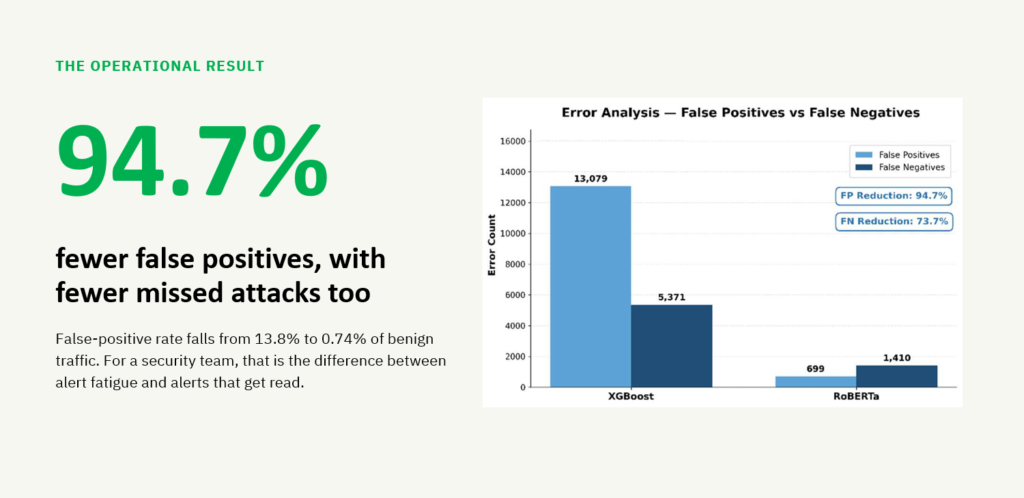
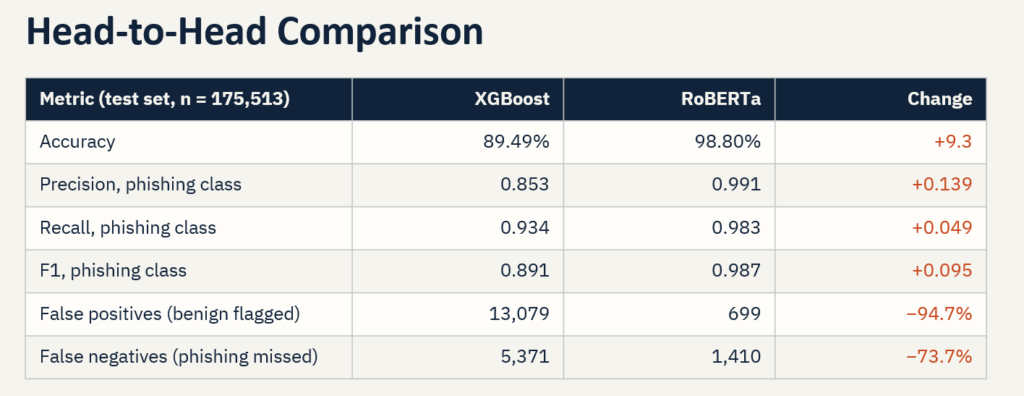
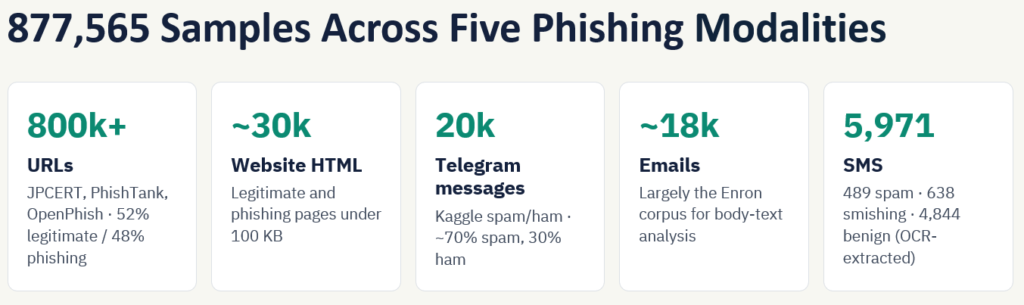
Most phishing filters rely on hand-engineered features like URL length and keyword counts, which break the moment an attacker rewords a message. With researchers at the University of Houston-Clear Lake, I fine-tuned RoBERTa, a pretrained transformer, on 877,565 URLs, emails, web pages, SMS and Telegram messages, and benchmarked it against an XGBoost model trained on TF-IDF features. Both models saw identical training and test splits, so the only difference was how they read the text. In three epochs, RoBERTa reached 98.8% accuracy versus 89.5% and cut false positives by 94.7%, so nineteen of every twenty false alarms disappeared, while missed attacks also fell by 73.7%. Next steps include LoRA fine-tuning to cut training costs and SHAP explanations so analysts can see why a message was flagged.
Published in the ICCNS 2026 conference proceedings (IEEE Computer Society) and submitted to IEEE Xplore.
NASA HUNCH
Ground control can be minutes away, so astronauts need health systems that think for themselves. As software lead across three NASA HUNCH projects, I build exactly that. Our in-suit system uses an LLM to detect medical emergencies and surface mitigation steps on the spot (National Finalist, 2025). Our lunar habitat system fuses facial-emotion recognition with wearable biometrics into a continuous wellness score that triggers tiered interventions. This year, we are pairing ocular computer vision with a physiological alertness model to re-optimize mission schedules around tired crews, under hard operational and medical constraints.
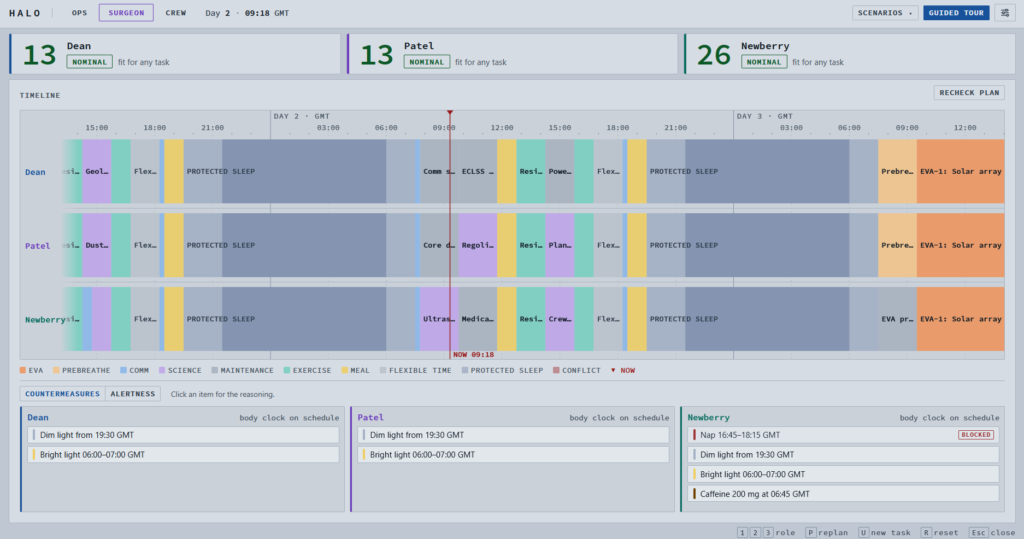
HALO, our crew fatigue management system, in its flight surgeon view. It tracks each astronaut’s alertness, builds the mission timeline around protected sleep, and recommends countermeasures such as timed light exposure and caffeine before a spacewalk. (Astronaut Dean is, sadly, still fictional.)
Facial Emotion Haptic Wearable
Much of a conversation happens on people’s faces, which leaves blind and visually impaired people missing half the message. This wearable passes those cues along through touch. A deep learning model classifies the facial emotion of the person the user is facing, and temporal smoothing filters out frame-to-frame flicker so the device reacts to sustained expressions (and not every little twitch of an eyebrow). Arduino-driven haptic motors then translate the detected emotion into touch feedback, delivering social cues privately and in real time without interrupting the conversation.
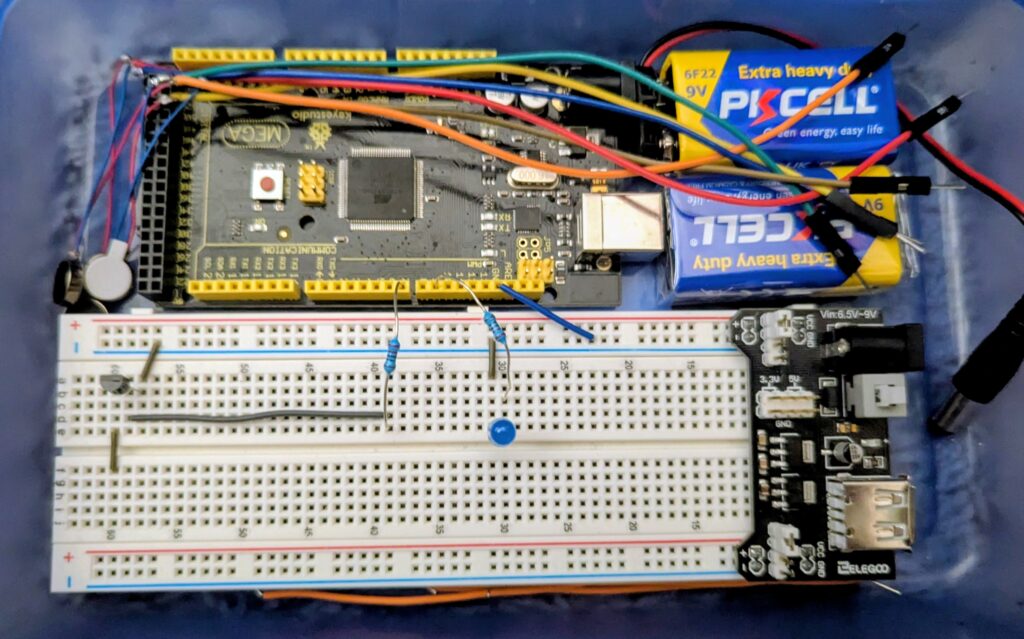
Components for the wearable prototype, packed for travel. Its electronics ride in a plastic bin between demos, with an Arduino Mega driving the coin vibration motors on the left.
CelesTerrAIn
Mars has no road signs, and the shortest route back to base is not always the safest. This system sends a drone or rover ahead to scout hazardous terrain and build a map of obstacles, then runs A* search over that map to compute safe escape paths for astronauts in an emergency. I built and tested it solo in a simulated Martian environment, since a real one was not in the budget. It won Challenge #8 and Grand Prize Runner-Up at the 2024 NASA JSC Hackathon.
Therapy AI Chatbot
Feeling overwhelmed? My therapy AI chatbot named Shrinky is here to help. This innovative therapy chatbot, designed specifically for teens facing depression and other mental health challenges, provides a safe and friendly space to talk. Powered by NLP technology, Shrinky can understand your concerns and hold conversations that feel natural and supportive. It remembers past conversations, allowing you to build a bond with your AI companion, all through a convenient and confidential web chat interface. With Shrinky, you’re never alone on your journey towards emotional well-being.

Security Software
This security software, designed for public spaces like schools, utilizes cutting-edge object detection powered by Python to proactively enhance safety. It incorporates multiple modules to identify potential threats. The weapon recognition module can detect firearms, while the intruder detection module identifies unauthorized individuals entering restricted areas. Additionally, the emotion recognition module can pick up on signs of distress or agitation. When the software detects a potential threat, it triggers an immediate alert sent directly to emergency responders, allowing for a swift and coordinated response.
This project won multiple awards including at the Congressional App Challenge and the Science & Engineering Fair.
NASA News Discord Agent
The NASA News Discord Agent bridges the gap between you and the latest space discoveries. This custom-built Discord bot leverages Natural Language Processing (NLP) to automatically scan the NASA website for new articles and blog posts. It then condenses these into easy-to-digest summaries, delivered directly to your Discord server. To enhance the experience, the agent utilizes AI to generate captivating images alongside the summaries. Stay informed, spark discussions with fellow space enthusiasts, and explore the cosmos without leaving your Discord server!
This project won both the Challenge Winner and Grand Prize awards at the NASA JSC Hackathon.
Space Hand-Tracking Game
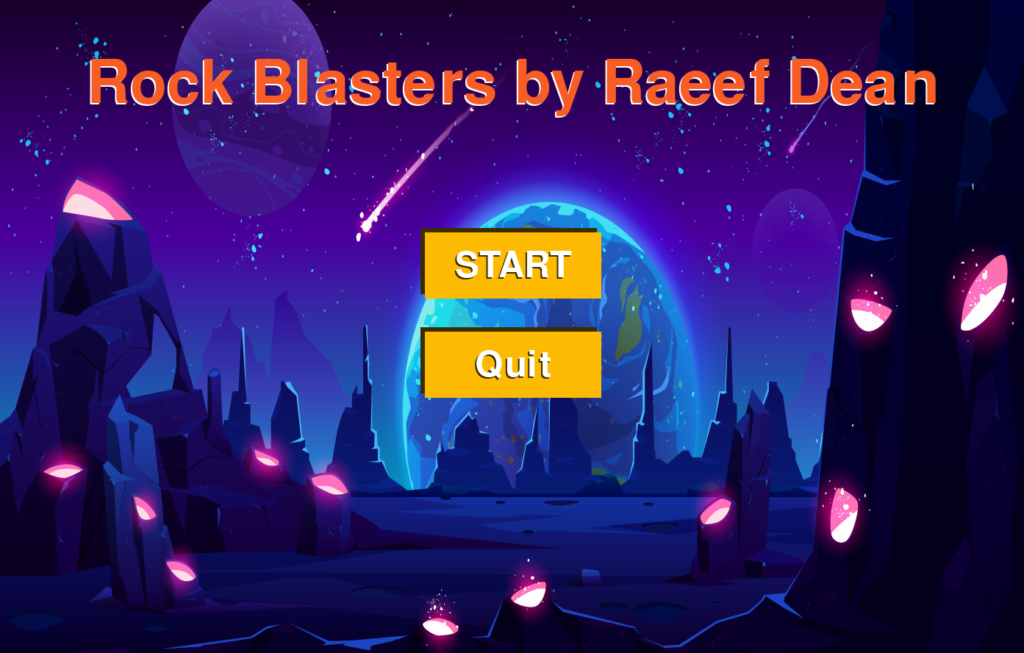
This hand-tracking space game combines entertainment with potential rehabilitation benefits. Built with Python and computer vision libraries, the game utilizes your hand movements to control a character on screen. Explore the cosmos by moving your hand like a cursor, and fire at meteors and alien attackers by simply squeezing your hand. This engaging game is not just fun, it can also help improve dexterity and encourage muscular movement, making it a great choice for rehabilitation or simply keeping your reflexes sharp!
American Sign Language Interpreter
This software aims to break down communication barriers between the signing and non-signing communities. Powered by Python and computer vision, the ASL Interpreter translates hand gestures into English expressions and displays it on the screen. Additionally, for visually impaired users, the software utilizes text-to-speech technology, allowing everyone to participate in the conversation. This innovative tool promotes inclusivity and understanding for a wider range of people.

Stock Price Reporter
Never miss a beat with your personal Stock Price Reporter. This Python-based program automates the process of tracking your chosen stocks. Throughout the trading day, it scrapes live data at regular intervals, compiling the collected information into insightful graphs. As the market closes, the reporter generates a detailed Excel file for each stock, conveniently visualizing price fluctuations throughout the day. This comprehensive report gets delivered directly to your inbox, keeping you informed and in control of your investment decisions.
Ares Discord Bot
Remember the long days of quarantine? The Ares Discord Bot was built to keep the fun and connection alive during those isolating times. This versatile Python bot, powered by the Discord API, offered a range of features for your server. Need a quick calculation? Ares could handle your math woes. Feeling indecisive? Consult the magical 8-ball for a playful nudge. Ares also served as a helpful moderator, maintaining order and keeping the community safe. New members were greeted with a warm welcome, and the bot could even provide a thought-provoking quote to spark conversation. With Ares, your Discord server became a lively hub for connection and entertainment, even during challenging times.
